Special Issues
After a very successful double issue, (issue 3-4 volume, 8 2014) , of Logica Universalis on this topic, we are expecting more papers for a second issue
DEADLINE: DECEMBER 31, 2018
Papers should be sent electronically in PDF to logic.theorem@logica-universalis.org
In view of the speedy and huge expansion of the universe of logics, the question of the scope of validity and the domain of application of fundamental logic theorems is more than ever crucial. What is true for classical logic and theories based on it, does not necessarily hold for non-classical logics.
But we may wonder if there is a logic deserving the name in which a theorem such as the incompleteness theorem does not hold. On the other hand a theorem such as cut-elimination does not hold for many interesting logical systems. Cut-elimination expresses the intrinsic analycity of a logic, the fact that a proof of a theorem depends only of its constituents, a not always welcome feature. Anyway, it is interesting to find necessary and/or sufficient conditions for cut-elimination to hold. And also for any important theorem of logic.
Any paper dealing with the scope of validity and domain of application of logic theorems is welcome, in particular those dealing with the following theorems:
- Löwenheim-Skolem (1915-1920)
- completeness (Post 1921 - Gödel 1930)
- incompleteness (Gödel 1931)
- cut-elimination (Gentzen 1934)
- undefinability (Tarski 1936)
- undecidability (Church-Turing, 1936)
- Lindenbaum's extension lemma (1937)
- compactness (Malcev 1938)
- incompleteness for modal logic (Dugundji 1940)
- Beth's definability theorem (1953)
- Craig's interpolation theorem (1957)
- completeness for modal logic (Kripke 1959)
- independence of CH (Cohen 1963)
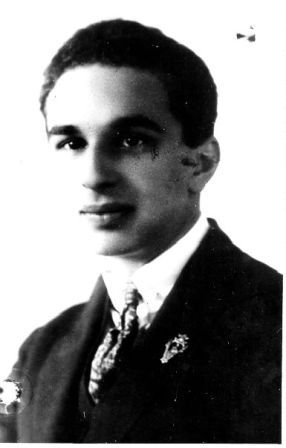
In Memoriam - Adolf Lindenbaum
(1904-1941)
Un mathématiclen, un mathématicien moderne en particulier, se trouve, dirait-on, à un degré superieur de l'activité consciente: il ne s'intéresse pas seulement a la question de quoi, mais aussi à celle du comment. Il ne se borne presque jamais à une solution - tout court - d'un problème, il veut avoir toujours les solutions les plus ...1es plus quoi? -les plus faciles, les plus courtes, les plus générales, etc.
A.Lindenbaum, "Sur la simplicité formelle des notions", in Actes du congrès international de philosophie scientifiqe, vol. VII, Logique, Hermann, Paris, 1936, pp.28-38.
"Adolf Lindenbaum: Notes on his Life, with Bibliography and Selected References"
by Jan Zygmunt and Robert Purdy